
15
Oct
2026
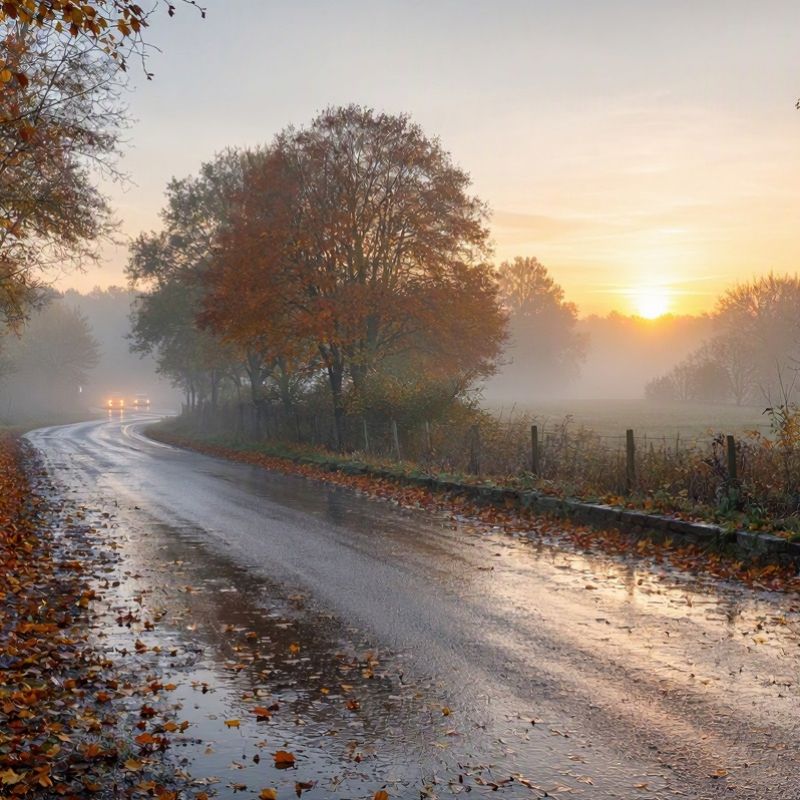
Every autumn we start to hear familiar warnings about slipping on wet leaves.
The advice is sensible. Wet leaves can create surprisingly slippery surfaces on footpaths, walkways, car parks and access routes. But focusing solely on leaves risks missing a much broader lesson.
In my experience, the leaves themselves are rarely the real hazard.
The hazard is change.
As health and safety professionals, one of the things we learn early in our careers is that people are generally very good at adapting to stable conditions. Whether those conditions are favourable or challenging, we become accustomed to them. We learn what to expect.
Problems often arise when something changes.
Autumn is full of change.
The days become shorter. The weather becomes less predictable. Road conditions alter. Staff return from summer leave. New projects begin. Seasonal activities increase. Organisations prepare for winter.
All of these factors can subtly influence how people perceive and respond to risk.
One of the challenges with risk management is that we often focus on obvious hazards while overlooking changing conditions.
Most people recognise ice as a hazard. Far fewer people think about the first significant rainfall after a long, hot summer.
After months of dry weather, roads can accumulate oil residues, rubber deposits, dust and other contaminants. Early autumn rain can lift these materials to the surface before they are washed away, creating unexpectedly slippery conditions.
Many drivers instinctively adjust their behaviour when faced with snow and ice.
Far fewer make similar adjustments when encountering the first wet roads of autumn.
The same principle applies in the workplace.
A task that has been carried out safely throughout the summer may present different challenges when lighting levels change, temperatures fall, outdoor surfaces become wet or visibility is reduced.
The activity may be exactly the same.
The conditions are not.
The transition from British Summer Time back to Greenwich Mean Time (or Universally Coordinated Time (UTC) for those younger than me) is another seasonal change that can affect risk.
For many people, routines that have become familiar during the summer months suddenly feel different.
Morning commutes may take place in darkness. Evening journeys often occur with reduced visibility. Pedestrians, cyclists and drivers all need time to adjust to changing light conditions.
Although the clocks going back provides an extra hour in bed, disrupted routines and altered sleep patterns can still affect concentration, alertness and decision-making.
These effects are often subtle.
Individually they may seem insignificant.
Combined with changing weather and changing environmental conditions, they can contribute to an increased likelihood of mistakes, near misses and incidents.
The effects of seasonal change are not confined to the workplace.
Autumn brings harvest activity, increased movement of agricultural vehicles on rural roads and, in some areas, mud and debris being deposited onto carriageways.
Seasonal events such as Halloween and Bonfire Night bring changes in travel patterns, larger gatherings and unfamiliar environments.
None of these activities are inherently dangerous. However, each represents another example of how changing circumstances can influence risk.
Good health and safety management requires us to recognise not only the hazards themselves, but also how people interact with them under changing conditions.
One of the key messages within HSG65: Managing for Health and Safety is the importance of continually reviewing risks, monitoring performance and adapting arrangements as circumstances change. The model encourages organisations to plan, do, check and act, ensuring that controls remain suitable and effective rather than assuming that what worked yesterday will work tomorrow.
The same principle applies to work-related driving.
The Health and Safety Executive promotes a risk-based approach to managing occupational road risk, recognising that factors such as weather, journey conditions, driver capability and vehicle suitability can all influence safety outcomes.
Autumn provides a timely reminder that these factors do not remain static throughout the year.
Perhaps the most important point is that this is not really an article about autumn.
It is an article about change.
Most incidents do not occur because a hazard suddenly appears out of nowhere.
They occur because something has changed and that change has not been recognised, assessed or managed appropriately.
That change might be:
Whenever change occurs, there is an opportunity for new risk to emerge.
The organisations that manage risk most effectively are often those that pause periodically and ask a simple question:
"What's different today?"
As we move from summer into autumn, it is worth taking a fresh look at our surroundings.
The leaves on the pavement may be the most visible sign of seasonal change, but they are rarely the biggest risk.
The bigger challenge is recognising how changing conditions influence the way we work, travel and make decisions.
Good health and safety management is not just about identifying hazards.
It is about recognising when the world around us has changed and ensuring our controls, behaviours and assumptions change with it.
After all, many organisations review risks following significant incidents.
The most resilient organisations review them when conditions change.
Professionals responsible for health and safety management may wish to review:
Foreland Safety Services supports organisations in identifying emerging risks, reviewing control measures and ensuring that health and safety arrangements remain effective as conditions, workplaces and operations evolve.
© Foreland Safety Services 2026 - All Rights Reserved
| Company Number: 16955682 Registered In England & Wales | Website by  | Update cookies preferences