
25
Aug
2026
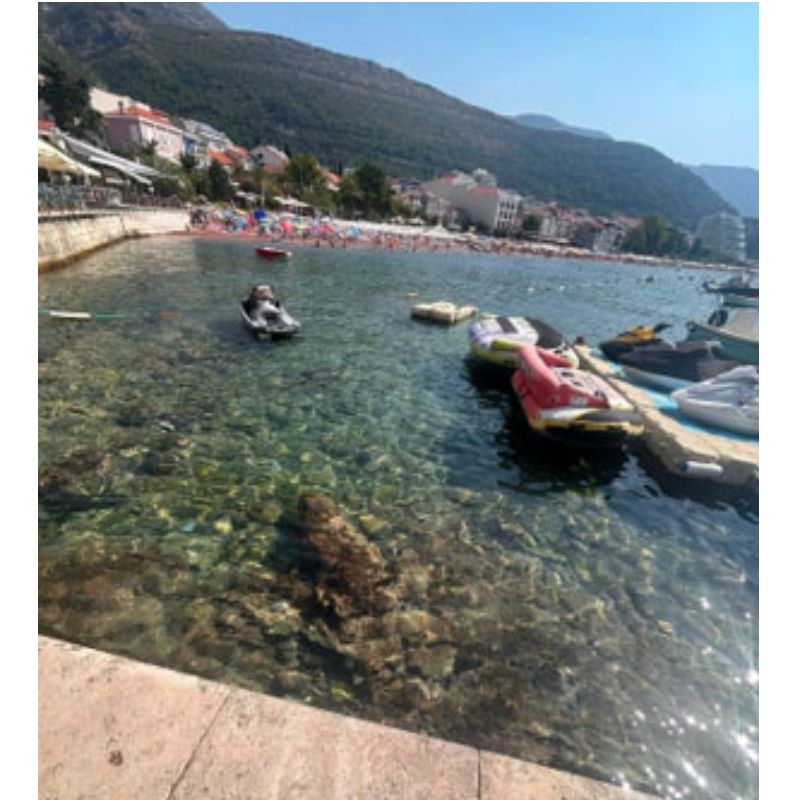
I recently returned from a holiday, with friends, in Montenegro. Like many summer holidays, it involved plenty of time around the water. Harbours, beaches, boats, swimming areas and waterfront restaurants all formed part of the experience.
On our very first evening, we wandered down to the harbour. Within minutes, I found myself observing things that most holidaymakers probably wouldn't have given a second thought to. Children were jumping into the sea from jagged rocks. Others were paddling inflatable kayaks in an offshore breeze. Some were swimming close to boats manoeuvring in and out of their berths.
I remember quietly muttering to myself that I can never seem to get away from work.
My professional background means I spend much of my life thinking about water safety and risk. Even when I'm supposed to be relaxing, I naturally find myself scanning the environment and considering what might go wrong.
The reality is that the same thing happened again this afternoon while spending time at our beach hut. What should have been a relaxing few hours by the sea involved me keeping an eye on my children as they played in the water. Were they staying between the lifeguard flags? Were they paddling any deeper than the 'belly button' limits we set? Were changing conditions affecting what had previously seemed like a safe area?
Some might see this as an inability to switch off.
Personally, I think it reflects something more valuable.
Seeing Risk Becomes a Habit
Anyone who works seriously in health and safety develops a different way of looking at the world.
You walk into a building and notice fire exits.
You enter a workplace and see trip hazards.
You visit a construction site and look at segregation between vehicles and pedestrians.
You spend time around water and immediately start identifying potential hazards and thinking about the consequences if things go wrong.
This isn't about pessimism. It is about understanding that incidents rarely occur completely without warning. More often, the warning signs are present but go unnoticed.
The challenge is that many hazards become normalised. When a behaviour is commonplace, people begin to view it as safe.
At the harbour in Montenegro, children had probably been jumping from those rocks for many years. At the beach, countless people enter the water every day without incident. That familiarity can create a false sense of security.
The absence of previous incidents does not automatically mean the risk is low.
Hot Weather Changes Behaviour
The UK's recent spell of hot weather has once again demonstrated how environmental conditions can influence decision making.
When temperatures rise, people naturally seek opportunities to cool down. Rivers, lakes, reservoirs, canals, quarries and coastal locations suddenly become far more attractive than they might have been just a few weeks earlier.
Unfortunately, hot weather can also influence judgement.
People may overestimate their swimming ability. They may enter unfamiliar water without understanding the hazards present. They may follow the actions of others without fully appreciating the risks involved.
From a health and safety perspective, this isn't unusual. We see similar behaviours in many settings. Time pressure, familiarity, peer influence and environmental conditions all affect how people perceive and respond to risk.
Water simply has less margin for error than many other environments.
The Risks We See and the Risks We Miss
One of the most important lessons I have learned, both in water safety and in health and safety more broadly, is that recognising hazards is only part of the picture.
Equally important is recognising what we might be missing.
I am fortunate to have extensive experience around water. As a result, I naturally notice many water-related hazards that others may overlook.
However, place me in a completely different environment and there will undoubtedly be hazards that a subject matter expert would identify immediately while I walk straight past them.
This is where organisations can sometimes come unstuck.
They focus on the risks they know about while failing to identify the risks hidden within their blind spots.
Good risk management is not simply about spotting hazards. It is about acknowledging that our own knowledge has limits and seeking the expertise required to identify what we may not see ourselves.
Signage Is Important, But It Is Not a Solution
One discussion that frequently arises around water safety is signage.
Whenever a water-related incident occurs, questions are often asked about whether warning signs were present and whether additional signs should be installed.
Signage certainly has an important role to play. Clear and consistent messaging can help people understand hazards and make informed decisions.
However, signs should rarely be viewed as the complete solution.
In health and safety, we understand that effective risk management is normally achieved through a combination of measures rather than a single intervention.
For locations where water presents a foreseeable risk, consideration should also be given to:
A sign may warn people about danger. It cannot physically prevent someone from entering the water or making a poor decision.
Responsibility Beyond the Water's Edge
For organisations, landowners and those responsible for public spaces, periods of warm weather should act as a reminder to review existing arrangements.
How are people actually using the site?
Have visitor numbers increased?
Are there areas where behaviour has changed?
Are warning signs, barriers and safety equipment still suitable and effective?
Has routine maintenance been completed?
These questions become particularly important as more people seek recreation and relief from the heat around water.
A Healthy Respect for Risk
Perhaps I will never completely switch off when I'm near the water.
If I'm honest, I don't think that's a bad thing.
A healthy awareness of risk does not prevent us from enjoying life. It simply helps us make better decisions.
Whether we're responsible for a public waterfront, a workplace, a recreational facility or simply watching our children play at the beach, maintaining an awareness of our surroundings remains one of the most effective safety tools available.
The key is recognising not only the hazards we can see, but also the hazards we may not.
Because in water safety, as in health and safety generally, our greatest risks are often found in the blind spots we never knew existed.
Guy Addington MBE – Foreland Safety Service Ltd Consultant
© Foreland Safety Services 2026 - All Rights Reserved
| Company Number: 16955682 Registered In England & Wales | Website by  | Update cookies preferences